

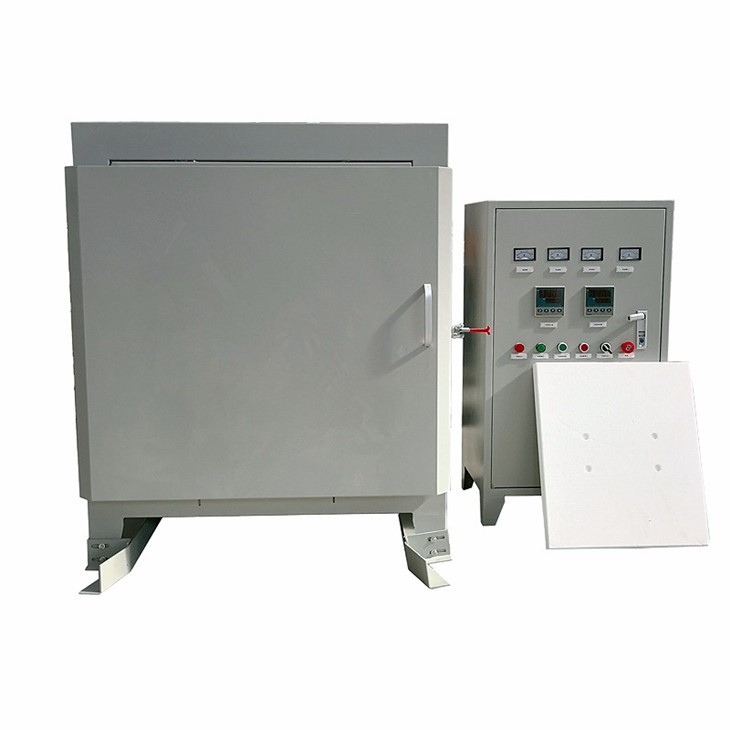
Industrial Sintering Furnace
Why Choose Us?
Reliable Product Quality
Xinkyo Company was founded in 2005 by professional materials researchers. Its founder studied at Peking University and is a leading manufacturer of high-temperature experimental equipment and new materials research laboratory equipment. This enables us to provide high-quality, low-cost high-temperature equipment for materials research and development laboratories.
Advanced Equipment
Main production equipment: CNC punching machines, CNC bending machines, CNC engraving machines, high-temperature oven CNC lathes, lying machines, gantry milling, machining centers, sheet metal, laser cutting machines, CNC punching machines, bending machines, self capacitive welding machines, argon arc welding machines, laser welding, sandblasting machines, automatic paint baking rooms.
Wide Range of Applications
The products are mainly used in ceramics, powder metallurgy, 3D printing, new material research and development, crystal materials, metal heat treatment, glass, negative electrode materials for new energy lithium batteries, magnetic materials, etc.
Wide Market
XinKyo Furnace's annual export sales revenue is more than 50 million, with North American markets (such as the United States, Canada, Mexico, etc.) accounting for 30% and European markets (such as France, Spain, Germany,etc) accounting for about 20%; 15% in Southeast Asia (Japan, Korea, Thailand, Malaysia, Singapore, India, etc) and 10% in the Russian market; 10% in the Middle East (Saudi Arabia, UAE, ect ), 5% in the Australian market, and the remaining 10%.
What is Industrial Sintering Furnace?
Sintering furnaces are key players in the sintering process. These ovens typically apply solid-state sintering methods to convert compact powders into thermally resistant molds. To achieve this result, metal sintering furnaces maintain temperatures below the powder’s melting point to shape rather than liquefy the material. This temperature causes the substance’s powder particles to bond and form a compact crystallized mass, increasing its strength and structural integrity.
-
![Industrial Muffle Furnace]() Industrial Muffle Furnace800℃ 1000℃ 1200℃ 1300℃ 1500℃ 1600℃ 1800℃ 216L chamber muffle furnace is a high-temperature equipment that meets customers' needs for large workpieces and mass production. It also can choose from...read more
Industrial Muffle Furnace800℃ 1000℃ 1200℃ 1300℃ 1500℃ 1600℃ 1800℃ 216L chamber muffle furnace is a high-temperature equipment that meets customers' needs for large workpieces and mass production. It also can choose from...read more -
![Customized Small Batch Industrial Sintering High-Temperature Furnace]() Customized Small Batch Industrial Sintering High-Temperat...This box type muffle furnace is a high-temperature furnace that meets the needs of customers for large workpieces and small batch production. Can meet customers' experimental needs for metal and...read more
Customized Small Batch Industrial Sintering High-Temperat...This box type muffle furnace is a high-temperature furnace that meets the needs of customers for large workpieces and small batch production. Can meet customers' experimental needs for metal and...read more -
![Large Muffle Furnace]() Large Muffle FurnaceOperating temperature: RT~1200℃read more
Large Muffle FurnaceOperating temperature: RT~1200℃read more
80L volume or customized
Kanthal resistance wire is spirally wound through corundum tube for heating, five-sided arrangement
Over temperature alarm... -
![1000 Degree Industrial Sintering Furnace]() 1000 Degree Industrial Sintering FurnaceHeavy duty loading furnace;read more
1000 Degree Industrial Sintering FurnaceHeavy duty loading furnace;read more
Inert gas atmosphere available;
PID controlled Industrial furnace; -
![Debinding And Sintering Furnace]() Debinding And Sintering FurnaceOperating temperature: RT~1000℃read more
Debinding And Sintering FurnaceOperating temperature: RT~1000℃read more
High quality energy-saving refractory bricks
125L volume or customized
High quality resistance wire is spirally wound through corundum tube for heating,... -
![Industrial Muffle Furnace]() Industrial Muffle FurnaceAn industrial muffle furnace is a type of high-temperature furnace that is commonly used in various industrial and manufacturing processes. A muffle furnace is a type of furnace that is used to...read more
Industrial Muffle FurnaceAn industrial muffle furnace is a type of high-temperature furnace that is commonly used in various industrial and manufacturing processes. A muffle furnace is a type of furnace that is used to...read more -
![Car Bottom Furnace]() Car Bottom FurnaceIndustrial Car Bottom loading electric annealing and metal tempering Furnace is welded by steel and profiled steel, furnace chambers ceramic fiber and high quality electric resistance wire, which...read more
Car Bottom FurnaceIndustrial Car Bottom loading electric annealing and metal tempering Furnace is welded by steel and profiled steel, furnace chambers ceramic fiber and high quality electric resistance wire, which...read more -
![Trolley Heat Treatment Industrial Muffle Furnace]() Trolley Heat Treatment Industrial Muffle FurnaceIndustrial electric furnace is a new, energy-saving, environment-friendly heat treatment equipment, ultra-energy structure, mainly for low-chrome ball, roll, ductile iron, flanges, automobile...read more
Trolley Heat Treatment Industrial Muffle FurnaceIndustrial electric furnace is a new, energy-saving, environment-friendly heat treatment equipment, ultra-energy structure, mainly for low-chrome ball, roll, ductile iron, flanges, automobile...read more -
![125L Industrial Sintering Muffle Furnace]() 125L Industrial Sintering Muffle FurnaceSX2-25-17TP is a high-temperature equipment that meets customers' needs for large workpieces and mass production. It can choose from 64L, 80L, 100L, 216L, 316L, 1000L, etc. to meet customers'...read more
125L Industrial Sintering Muffle FurnaceSX2-25-17TP is a high-temperature equipment that meets customers' needs for large workpieces and mass production. It can choose from 64L, 80L, 100L, 216L, 316L, 1000L, etc. to meet customers'...read more -
![Tailor-made Atmosphere Furnace Upto To 600L]() Tailor-made Atmosphere Furnace Upto To 600LProducts other than the regular version, with large capacity, ranging from 36 liters to 600 liters, are hotly sold. It can be used from room temperature to 1750℃. Allowing inert gas to be filled...read more
Tailor-made Atmosphere Furnace Upto To 600LProducts other than the regular version, with large capacity, ranging from 36 liters to 600 liters, are hotly sold. It can be used from room temperature to 1750℃. Allowing inert gas to be filled...read more


Advantages of Industrial Sintering Furnace
Complex Shapes and Intricate Designs
Industrial sintering furnace allows for the production of components with complex shapes and intricate designs that would be difficult to achieve using traditional machining techniques. This flexibility in shaping enables the production of customized components tailored to specific applications.
Improved Mechanical Properties
During the industrial sintering furnace process, the particles bond and densify, resulting in components with superior performance characteristics. This leads to improved strength, hardness, and wear resistance of the sintered product. The controlled heating and diffusion mechanisms involved in sintering contribute to the development of a dense and cohesive structure, enhancing the overall mechanical integrity of the component.
Cost-Effectiveness
Industrial sintering furnace is a cost-effective manufacturing method compared to traditional melting and casting processes. The use of powdered materials reduces material waste, as excess powder can be collected and reused. Additionally, the sintering process requires lower energy consumption since it operates at temperatures below the melting point of the material. The ability to produce near-net-shape components further reduces the need for subsequent machining operations, resulting in cost savings in terms of material usage, energy consumption, and post-processing.
Versatility in Material Selection
Industrial sintering furnace offers versatility in material selection, accommodating a wide range of materials for various applications. It is suitable for ceramics, metals, and composites. Different types of materials, including oxides, carbides, nitrides, and alloys, can be processed through sintering. This broad material compatibility allows for the production of diverse components with specific material properties, making sintering an attractive choice for multiple industries.
Application of Industrial Sintering Furnace
The application of sintering furnaces is quite extensive across various industries. One of the primary areas where sintering is widely employed is in the field of ceramics. Sintering is used in the production of ceramic tiles, sanitaryware, cutting tools, refractory materials, and electrical insulators. By carefully controlling the sintering parameters, ceramic materials can achieve improved mechanical strength, hardness, and thermal stability, as well as the desired density, porosity, and microstructure for specific applications.
Additionally, sintering furnaces are used in the manufacturing industry to produce metals, plastics, and other materials. They are commonly used to develop stainless-steel tools and shotgun shells. industrial sintering furnaces apply solid-state sintering methods to convert compact powders into thermally resistant molds. The temperature in these furnaces is maintained below the powder's melting point, causing the powder particles to bond and form a compact crystallized mass, thus increasing its strength and structural integrity.
Sintering furnaces can be categorized into batch furnaces, which are suitable for sintering low-volume products, and continuous furnaces, which are useful for medium- to high-volume materials.
In addition to ceramics and manufacturing, sintering is also utilized in other industries. For example, sintering is involved in the production of mineralogical deposits through natural processes. Atomic diffusion causes particles in geological samples to fuse into high-density ore. Understanding this reaction has informed modern powder metallurgy processes, allowing for the formation of finely-tuned compact metal products with elements featuring extreme melting points, such as tungsten.
Metals
A wide range of metals can be used in sinter processes of several types. This includes: Iron, iron-copper, copper steels, nickel steels, stainless steels (300 and 400 series), high-strength low-alloy steels (HSLA), medium- and high-carbon steels, and diffusion hardenable steels, brass, and bronze, and soft iron magnetic alloys. All of these can be built as green parts by 3D printing and then sintered to high-quality, low-porosity parts of excellent properties. Metals can be sintered by pressing, molding, and injection molding.
Ceramics
Most ceramic processes are considered either sintering or close to sintering. A selection of commonly 3D (SLS or paste deposited) printed and then sintered ceramics are: alumina, aluminum nitride, zirconia, silicon nitride, boron nitride, and silicon carbide. Ceramics are generally sintered by compression or press molding.
Polymers
Sintered polymers fall into two categories: large and small particle sintering. Large particle sintering with high porosity is commonly applied as filtration and pneumatic silencer materials and as flow diffusion controllers. These include: Polyethylene, polypropylene, and polytetrafluoroethylene.
Small particle sintered polymers are used in 3D printing in processes such as selective laser sintering. This is used to produce integrated and high-strength components with near-native material properties and near-zero porosity. Examples are: polyamides, polystyrene, thermoplastic elastomers, and polyether-ether ketones.
Composites
Sintering of composites is a more complex group of processes, and various materials are processed in different ways. Tungsten carbide uses tungsten and carbon powders. Pressure-heat oxidation transforms the carbon to carbide. This couples the metal powder, which remains unaltered. Glass, carbon, and metal fibers are experimentally included in metal powder sinters, to enhance properties. In some regards, the processing of carbon fiber is a sintering process. An adhesive matrix is compressed and heat activated to bond the carbon component. Metal oxide ceramics are experimentally composited with polymers such as PEEK to manufacture forms of resistive semiconductors. Sintering of composites is highly varied and can be achieved by compression, molding, and in limited cases injection molding
Glass
Various glass materials are used in sintering processes, including: Ceramic glazes, silica glass, lead glass, as well as sintered glass slabs made from fused silica glass powder. Sintering of glass is generally done by compression molding.
Key Components of a Industrial Sintering Furnace
Vacuum Chamber
This is the primary component where the sintering process takes place. It is designed to withstand high temperatures and vacuum conditions.
Water Cooling System
For cooling the furnace shell and the vacuum pump.
Heating Element
This is responsible for providing the high temperatures required for sintering. Depending on the specific application, different types of heating elements may be used, including graphite, tungsten, or molybdenum.
Loading System
This is used for loading and unloading the materials to be sintered. It can be manual or automated, depending on the size and complexity of the production process.
Vacuum Pump
This is used to create the vacuum within the chamber. There are different types of vacuum pumps, such as rotary vane pumps, diffusion pumps, and turbomolecular pumps, each having different vacuum levels and pumping speeds.
Temperature Control System
This is crucial for controlling the heating rate, sintering temperature, and cooling rate. It often includes a thermocouple to measure the temperature and a control unit to adjust the heating element’s power.
Why Is It Necessary to Control the Atmosphere During Sintering in an Industrial Sintering Furnace?


Improved optical properties
In pressureless sintering, the atmosphere is often controlled to improve the optical properties of ceramics. By controlling the atmosphere, the final product can have enhanced transparency or other desired optical characteristics.
Defect prevention
The atmosphere can help in preventing defects that may occur during the sintering process. Some components in the material can volatilize and cause defects, but by controlling the atmosphere, these defects can be minimized or eliminated.
Chemical reactions
The atmosphere in industrial furnaces used for sintering can either encourage or prevent chemical reactions. By controlling the atmosphere, the desired chemical reactions can be facilitated, leading to the desired properties in the final product.
Precise and repeatable results
Industrial furnaces used for sintering must be able to produce precise and repeatable results. This can be achieved by carefully monitoring and controlling the furnace atmosphere, temperature, and air flow. Controlling the atmosphere is crucial in ensuring consistent and high-quality sintered parts.
Selection of sintering atmosphere
The selection of the sintering atmosphere is important and depends on the material and the desired final application. Different atmospheres such as nitrogen-hydrogen, hydrogen, vacuum, dissociated ammonia, and endothermic gas can be used for sintering, depending on the specific requirements of the process.
What Is the Temperature of Industrial Sintering Furnace?
The temperature of a industrial sintering furnace typically ranges from 1300 to 1400 °C. industrial sintering furnaces are used in the process of converting compact powders into thermally resistant molds. The ovens maintain temperatures below the powder's melting point to shape the material without liquefying it. This temperature causes the powder particles to bond and form a compact mass, increasing the strength and integrity of the material.
The room temperature can affect the performance of a industrial sintering furnace. If the room temperature is below 50 degrees, the oven may not heat up properly. It is recommended to keep the industrial sintering furnaces in a room that is above 50 degrees to ensure proper functioning.
The quality of the crown produced in a industrial sintering furnace can be compromised if the oven does not reach the required temperature or if the temperature is not uniform. Temperature accuracy and uniformity are important factors to consider when selecting a industrial sintering furnace. The oven should have excellent temperature accuracy and uniformity to ensure consistent and high-quality results.
When selecting a industrial sintering furnace, it is important to consider factors such as the operating temperature, size of the oven opening, furnace process atmosphere, material being processed, mass of the component, and required output. The choice between a batch furnace and a continuous furnace depends on the volume of production. Low-volume productions typically use a batch furnace, while high- or medium-value productions may require a continuous furnace.
Overall, the temperature of a industrial sintering furnace is crucial for the successful sintering process and the quality of the final product. It is important to choose a industrial sintering furnace that can achieve the required temperature accurately and uniformly.
The Considerations for Buying Industrial Sintering Furnace?
Sintering requirements
Firstly, clarify your sintering requirements, including the type of sintering material, sintering temperature, sintering time, etc. This will help determine the model and specifications of the sintering furnace you need.
Temperature requirements
Determine the maximum required working temperature and select a sintering furnace that can reach and maintain this temperature. For example, ceramic materials may require temperatures above 1600 ° C, while metal powder sintering typically occurs in the range of 1200-1500 ° C.
Atmosphere control
Determine whether it is necessary to control the atmosphere inside the furnace (such as inert gas, vacuum, reducing atmosphere, etc.). Different materials have different requirements for the atmosphere, and atmosphere control is crucial for preventing oxidation, decarbonization, or other adverse reactions.
Furnace size and loading capacity
Select the appropriate furnace size and loading capacity based on the production scale and workpiece size. It is necessary to ensure that the sintering furnace can accommodate all the workpieces to be sintered and meet the needs of mass production.
Uniformity and stability
Consider the uniformity of temperature inside the furnace and the stability of long-term operation. This is crucial for ensuring consistent sintering quality and improving product qualification rates.
Control system
Select a sintering furnace with advanced control system to accurately control temperature, heating rate, insulation time, and cooling rate. Modern control systems can also provide data recording and remote monitoring functions, facilitating process optimization and quality traceability.
Energy consumption and efficiency
Consider the energy consumption and efficiency of the sintering furnace. Choosing a furnace type with low energy consumption and high thermal efficiency can reduce operating costs and improve economic benefits.
Material compatibility
Ensure that the furnace lining material and heating elements are compatible with the sintered material to prevent contamination or chemical reactions and ensure the purity of the sintering process.
Temperature control and safety performance
The stability and accuracy of the temperature control system are very important for the control of the sintering process, so it is necessary to choose equipment with good temperature control performance. At the same time, the safety performance of the furnace is also an important consideration factor, such as whether it has overheating protection function, whether it has gas leakage alarm, etc.
Maintenance and upkeep
Understand the maintenance needs and difficulty of sintering furnaces. Choosing equipment that is easy to maintain and repair can reduce downtime and improve production continuity.
Equipment quality and after-sales service
Choosing a well-known brand of sintering furnace can ensure the quality and stability of the equipment. Meanwhile, choosing a supplier with good after-sales service can ensure timely technical support and maintenance during use.
Budget and cost
Finally, consider budget and equipment costs. On the premise of meeting technical requirements, choose equipment with high cost-effectiveness. Both initial investment and long-term operating costs need to be comprehensively evaluated.
Trends in the Industrial Sintering Furnace Market

Advanced Heating Elements for Uniformity
One of the prominent trends in the industrial sintering furnace market is the adoption of advanced heating elements for improved temperature uniformity. Furnaces equipped with sophisticated heating systems, such as molybdenum disilicide (MoSi2) elements, offer precise control over temperature profiles. This ensures uniform heating throughout the sintering process, resulting in consistent and high-quality sintered parts. Industries requiring tight tolerances and complex geometries benefit from these advanced heating elements.
Rise of Vacuum Sintering Technology
Vacuum sintering technology is gaining traction in the market, particularly in industries like aerospace and medical devices. Vacuum sintering eliminates the presence of oxygen and other contaminants during the sintering process, resulting in parts with superior mechanical properties and reduced oxidation. These furnaces operate under controlled atmospheres, preventing material degradation and ensuring the integrity of the final product. As demand grows for high-performance and precision components, vacuum sintering technology becomes indispensable.
Integration of Rapid Sintering Methods
With the push for faster production cycles, rapid sintering methods are becoming a trend in the market. Furnaces with rapid sintering capabilities use advanced heating techniques to significantly reduce processing times while maintaining quality. These methods, such as microwave sintering and spark plasma sintering, offer quick heating rates and shortened dwell times. Industries benefit from increased productivity and reduced energy consumption, making rapid sintering an attractive solution for time-sensitive applications.
Digitalization and Industry 4.0 Integration
Digitalization and the integration of Industry 4.0 principles are transforming industrial sintering furnace operations. Smart furnaces equipped with sensors and connectivity features allow for real-time monitoring and control of the sintering process. Data analytics provide insights into furnace performance, predicting maintenance needs and optimizing parameters for efficiency. Industry 4.0 integration improves productivity, quality control, and overall operational efficiency in sintering operations.


Customizable and Modular Furnace Designs
Manufacturers are responding to the demand for flexibility with customizable and modular furnace designs. These furnaces can be tailored to specific production needs, with options for chamber sizes, heating elements, and atmospheres. Modular designs allow for easy upgrades and expansions as production requirements change. Industries with diverse sintering needs, such as research institutions and small-scale manufacturers, benefit from the versatility and scalability of customizable furnaces.
Energy Efficiency and Sustainability Initiatives
Energy efficiency and sustainability are driving forces in the industrial sintering furnace market. Furnace manufacturers are developing energy-efficient models with improved insulation and heating elements. These furnaces reduce energy consumption and operating costs while minimizing environmental impact. Additionally, the use of renewable energy sources, such as solar and wind power, to operate industrial sintering furnaces aligns with sustainability goals. Industries are increasingly prioritizing green technologies and eco-friendly processes in their sintering operations.
Application Expansion into Additive Manufacturing
The expansion of industrial sintering furnace applications into additive manufacturing, specifically with metal 3D printing, is a notable trend. industrial sintering furnaces are essential for post-processing metal additive manufacturing parts, removing binder materials and achieving final part density. These furnaces use debinding and sintering processes to produce fully dense metal components with complex geometries. As metal 3D printing gains momentum in various industries, the demand for industrial sintering furnaces for post-processing continues to grow.
Common Faults and Causes of Industrial Sintering Furnaces
No power display on the instrument
This may be due to the power not being connected, power cord failure, or internal fuse blowing. The solution includes checking if the power socket, power switch, and power cord are functioning properly, as well as replacing damaged fuses.
The temperature inside the furnace does not rise
When the temperature inside the industrial sintering furnace cannot rise, it may be caused by damage to the heating element, malfunction of the temperature controller, or abnormal power supply. At this time, it is necessary to check whether the heating element is intact, adjust the temperature controller setting, and confirm whether the power supply voltage is stable.
The set temperature does not match the temperature inside the furnace
This type of fault may be caused by incorrect thermocouple wiring, sensor failure, or misalignment of the temperature control system. The solution includes checking if the thermocouple wiring is correct, replacing faulty thermocouples or sensors, and calibrating or replacing the temperature controller.
The instrument output is normal but the OUT indicator light does not flash
This usually means that there is a fault in the main circuit, such as a damaged thyristor, faulty indicator light, or a broken heating resistor wire. It is necessary to inspect and replace the corresponding components.
Temperature instability or inability to reach the set temperature
This may be due to issues with the temperature control system or heating elements. It is necessary to inspect and adjust the temperature control system, as well as replace damaged heating elements.
Shell heating or abnormal noise
The cooling system or fan may have problems, resulting in ineffective heat dissipation. The cooling system and fan should be checked for proper operation.
Abnormal odor or smoke
This may be due to material combustion or other component malfunctions. Immediate cessation of use and inspection of the furnace for foreign objects or damaged components.
Abnormal display or operation failure of the control panel
The control circuit or panel may be damaged. The control circuit and panel should be checked for integrity, and if damaged, they should be replaced in a timely manner.
Gas concentration does not meet the indicated standard
If the industrial sintering furnace needs to work in a specific atmosphere, a malfunction in the atmosphere control system or gas supply issues will affect the treatment effect; Poor furnace sealing or gas leakage at pipeline connections can lead to atmosphere leakage or temperature instability during the treatment process.
Our Certifications


Our Factory
Xinkyo Company was founded in 2005 by professional materials researchers. Its founder studied at Peking University and is a leading manufacturer of high-temperature experimental equipment and new materials research laboratory equipment. This enables us to provide high-quality, low-cost high-temperature equipment for materials research and development laboratories. Our products include high-temperature ovens, tube furnaces, vacuum furnaces, trolley furnaces, lifting furnaces, and other complete sets of equipment. Thanks to its excellent design, affordable prices, and customer service, Xinkyo is committed to becoming the world leader in materials science research for high-temperature equipment.


Ultimate FAQ Guide to Industrial Sintering Furnace
As one of the leading industrial sintering furnace manufacturers and suppliers in China, we warmly welcome you to buy high-grade industrial sintering furnace for sale here from our factory. All our products are with high quality and competitive price.