


Why Choose Us?
Reliable Product Quality
Xinkyo Company was founded in 2005 by professional materials researchers. Its founder studied at Peking University and is a leading manufacturer of high-temperature experimental equipment and new materials research laboratory equipment. This enables us to provide high-quality, low-cost high-temperature equipment for materials research and development laboratories.
Advanced Equipment
Main production equipment: CNC punching machines, CNC bending machines, CNC engraving machines, high-temperature oven CNC lathes, lying machines, gantry milling, machining centers, sheet metal, laser cutting machines, CNC punching machines, bending machines, self capacitive welding machines, argon arc welding machines, laser welding, sandblasting machines, automatic paint baking rooms.
Wide Range of Applications
The products are mainly used in ceramics, powder metallurgy, 3D printing, new material research and development, crystal materials, metal heat treatment, glass, negative electrode materials for new energy lithium batteries, magnetic materials, etc.
Wide Market
XinKyo Furnace's annual export sales revenue is more than 50 million, with North American markets (such as the United States, Canada, Mexico, etc.) accounting for 30% and European markets (such as France, Spain, Germany,etc) accounting for about 20%; 15% in Southeast Asia (Japan, Korea, Thailand, Malaysia, Singapore, India, etc) and 10% in the Russian market; 10% in the Middle East (Saudi Arabia, UAE, ect ), 5% in the Australian market, and the remaining 10%.
What is Industrial Muffle Furnace?
An industrial muffle furnace is a type of high-temperature furnace that is commonly used in various industrial and manufacturing processes. A muffle furnace is a type of furnace that is used to heat materials to high temperatures while keeping them isolated from their surroundings. This is achieved by placing the material in a ceramic or metal container known as a muffle, which is then heated in the furnace. Muffle furnaces are commonly used in materials science, chemistry, and other fields that require high-temperature processing of materials.

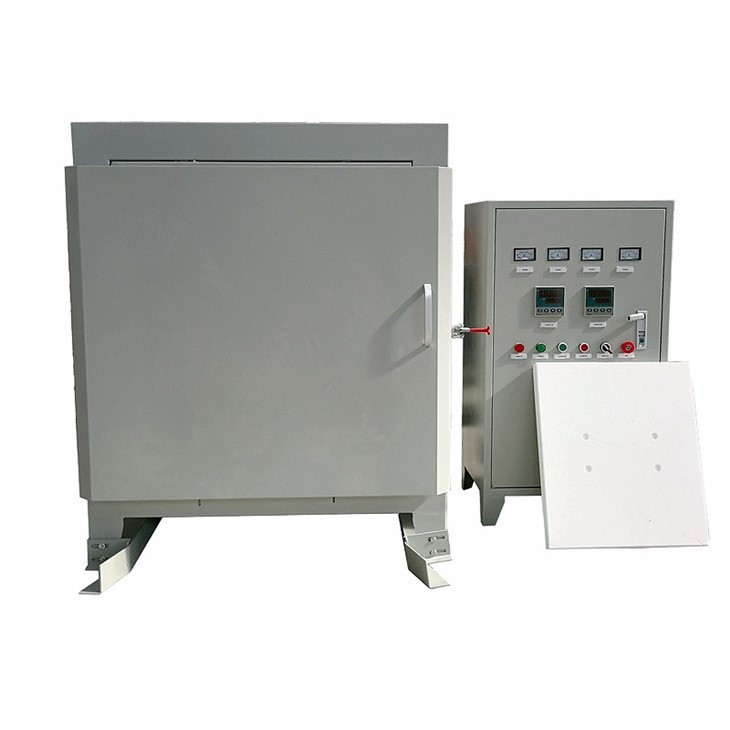
Industrial Car Bottom loading electric annealing and metal tempering Furnace is welded by steel and profiled steel, furnace chambers ceramic fiber and high quality electric resistance wire, which can save 40% energy than brick furnace chamber car bottom furnace is mainly used for annealing, normalizing and stress relieving of bars and tubes, forgings, large weldments and castings.

Trolley Heat Treatment Industrial Muffle Furnace
Industrial electric furnace is a new, energy-saving, environment-friendly heat treatment equipment, ultra-energy structure, mainly for low-chrome ball, roll, ductile iron, flanges, automobile parts and other products tempering heat treatment purposes.

125L Industrial Sintering Muffle Furnace
SX2-25-17TP is a high-temperature equipment that meets customers' needs for large workpieces and mass production. It can choose from 64L, 80L, 100L, 216L, 316L, 1000L, etc. to meet customers' sintering, annealing, tempering and other experimental needs.

800℃ 1000℃ 1200℃ 1300℃ 1500℃ 1600℃ 1800℃ 216L chamber muffle furnace is a high-temperature equipment that meets customers' needs for large workpieces and mass production. It also can choose from 64L, 80L, 100L, 125L, 316L, 1000L, etc. to meet customers' sintering, annealing, tempering and other experimental needs.

Tailor-made Atmosphere Furnace Upto To 600L
Products other than the regular version, with large capacity, ranging from 36 liters to 600 liters, are hotly sold. It can be used from room temperature to 1750℃. Allowing inert gas to be filled into the furnace, the CE and UL certified temperature controller allows 30 to 50 temperature time control intervals with an accuracy of ±1°C. Efficient and mature.
Advantages of Industrial Muffle Furnace
Precise Temperature Control
Muffle furnaces are equipped with advanced temperature control systems that enable precise and accurate temperature settings. This is achieved through high-quality heating elements, efficient insulation, and sophisticated temperature sensors. The ability to maintain consistent temperatures is crucial for various applications, ensuring reliable and reproducible results.
Uniform Heating Distribution
Muffle furnaces are designed to provide uniform heating distribution throughout the chamber, eliminating hot and cold spots. This ensures consistent heating of materials, reducing the risk of uneven processing or damage. Uniform heating is particularly important for applications requiring precise temperature uniformity, such as heat treating, annealing, and sintering.
Energy Efficiency
Muffle furnaces are engineered to be energy-efficient, utilizing innovative technologies to minimize heat loss and maximize energy utilization. This results in reduced operating costs and a smaller carbon footprint. The use of high-quality insulation, efficient heating elements, and optimized chamber design contributes to the energy efficiency of muffle furnaces.
Safety Features
Safety is a paramount concern in laboratory and industrial settings. Muffle furnaces are equipped with a range of safety features to protect users and prevent accidents. These features include automatic shut-off mechanisms, over-temperature protection, and safety equipment such as safety goggles and heat-resistant gloves. The incorporation of these safety features ensures a safe working environment and minimizes the risk of injuries or equipment damage.
User-Friendly Controls
Muffle furnaces are designed with user-friendly controls that make them easy to operate and monitor. Simple control panels, intuitive interfaces, and clear instructions allow users to set and adjust temperature, heating rates, and other parameters with ease. The user-friendly design enhances the overall efficiency and productivity of laboratory and industrial operations.
Durability and Reliability
Muffle furnaces are built to last, with high-quality materials and robust construction. They are designed to withstand high temperatures, chemical exposure, and demanding operating conditions. The use of durable materials and meticulous manufacturing processes ensures long-lasting performance and reliability, minimizing downtime and maintenance requirements.
Versatile Applications
Muffle furnaces are incredibly versatile and find applications in various fields, including metallurgy, ceramics, electronics, and materials science. They are used for a wide range of processes, such as heat treating, annealing, sintering, and drying. The ability to handle different materials and perform diverse processes makes muffle furnaces indispensable tools in various industries and research institutions.
Types of Industrial Muffle Furnace
Box Furnace: The Versatile All-Rounder
Box furnaces, also known as high-temperature furnaces, are the most common type of muffle furnace. They feature a metal box construction with a heating chamber and a muffle inside, which houses the material being heated. Heating elements are positioned outside the muffle, and a temperature controller ensures precise temperature regulation.
Tube Furnace: A Specialist for Continuous Processes
Tube furnaces are designed for heating small samples in an inert atmosphere, making them ideal for processes requiring precise temperature control and minimal contamination. These furnaces consist of a cylindrical heating chamber with a muffle inside, where the material to be heated is placed. Heating elements surround the muffle, providing uniform heating.
Crucible Furnace: Melting and Heat-Treating Made Easy
Crucible furnaces are specifically designed for melting and heat-treating small amounts of material. They feature a small muffle that can hold a crucible, which contains the material being heated. Heating elements are located outside the muffle, and temperature control is achieved using a temperature controller.
Split Furnace: Easy Maintenance and Cleaning
Split furnaces stand out with their removable muffle, which can be easily taken out for cleaning or maintenance. This feature is particularly beneficial in applications where the muffle may become contaminated or damaged over time. Split furnaces offer the advantage of easy maintenance and reduced downtime, making them a preferred choice for laboratories and industries that require frequent cleaning and maintenance procedures.
Application of Industrial Muffle Furnace
Glass Industry
Many procedures in glass manufacturing require high temperatures to identify the characteristics of raw materials and create a high-quality product. A muffle furnace is used to melt glass during recycling, mold the glass material to create different product shapes, put glass products through heat to toughen them, and many others. Electric muffle furnaces have been introduced in the glass production industry to reach the required temperatures easily.
Ceramics
Ceramic materials are essential in many industries. Replicating high temperatures and extreme environments is necessary to assess the quality and characteristics of ceramics. A muffle furnace is one of the best testing instruments for this, allowing researchers and manufacturers to reach the high temperatures needed easily.
Paint Industry
High temperature is needed to speed up the drying process of paints, enamels, and coatings. Paint manufacturers can do this and fast-track their process with the help of high heat from muffle furnaces. This way, paint manufacturers can determine the quality and performance of the paints efficiently.
Research and Analysis
Aside from industrial processes, the muffle furnace is also essential for research and development laboratories. Chemists utilize these furnaces to determine a sample's composition, specifically for combustion testing. Researchers identify material properties and behavior by placing a sample inside the lab muffle furnace or chamber. Then, they'll set the furnace at the required temperature specification to examine how the sample reacts in different conditions.
Aerospace
Aerospace industries use muffle furnaces to test the flame retardancy of specific materials or aircraft parts. They do this by placing the objects at extremely high temperatures. This testing device is crucial for aerospace companies, as they develop and test heat-duty materials that can work in an atmosphere-controlled environment.
Components of Industrial Muffle Furnace

Heating elements
These components generate heat within the furnace and are usually made of resistance wire or ceramic materials.
Muffle
This is the insulated chamber where the samples to be heated are placed. The muffle is typically made of ceramic or other refractory materials that can withstand high temperatures.
Temperature controller
This component regulates the temperature within the furnace. It may have a digital display, setpoint adjustment, and various safety features.
Thermocouple
This is a temperature sensor that measures the temperature inside the muffle and sends the information to the temperature controller.
Power supply
This component provides the electrical power needed to operate the furnace.
Insulation
The furnace is surrounded by insulation material to help maintain a constant temperature inside the muffle.
Outer casing
This is the protective outer shell of the furnace, which is usually made of steel or other materials.

Exhaust system (optional)
Some muffle furnaces may include an exhaust system to vent gases or fumes from the furnace.
● To avoid burning the electric heating element, do not exceed the maximum rated temperature of the resistance furnace. Ensure that the furnace area is well-ventilated to avoid the accumulation of harmful gases or fumes.
● Cut off the power supply to prevent electric shock when loading and sampling. And follow the correct loading procedure to avoid overloading the furnace.
● When loading and sampling, open the furnace door as quickly as possible. This will prolong the service life of the muffle furnace.
● Do not fill the furnace with any liquids and soluble metals.
● Do not put the sample with water and oil into the furnace. Do not take samples with clamps with water and oil.
● Wear gloves when loading and taking samples to prevent burns.
● Samples should be placed neatly in the middle of the furnace body. Often, keep the furnace chamber clean and timely removal of oxides and other things in the furnace.
● Must dry The muffle furnace for the first time or after a long period of deactivation and reuse. The oven drying time is 4 hours. The temperature is 200 ℃ to 600 ℃.
● You should use the muffle furnace controller within the ambient temperature range of 0-40℃. Do not pull out the thermocouple suddenly at a high temperature to prevent an explosion.
● When melting samples or burning sediments with alkaline substances in the furnace, it is better to lay a refractory plate on the bottom of the furnace to prevent corrosion of the furnace chamber.
Types of Temperature Control Technology for Industrial Muffle Furnace
PID
This is a temperature control technique widely used in resistance furnaces. It adjusts the heating power by means of three control terms, proportional, integral and differential, in order to respond quickly to temperature changes, reduce temperature fluctuations and finally reach the set temperature.
• Advantages: Economical and cost-effective, muffled furnace with PID technology is suitable for small and medium-sized experiments.
• Disadvantages: Difficult to adapt to complex, variable temperature changes.
Microprocessor
This is a more sophisticated temperature control technology, which enables more flexible temperature control by means of a microcomputer.
• Advantages: Temperature control is more flexible, can usually achieve multi-stage temperature control, and equipped with a display to simplify the operation of the steps.
• Disadvantages: Compared with PID control, the cost may be higher.
Intelligent control system
It can achieve automatic temperature adjustment, fault diagnosis, real-time monitoring and other advanced automated intelligent control, and provide higher temperature control accuracy.
• Advantages: High degree of intelligence, can achieve automatic temperature adjustment, real-time monitoring, fault diagnosis and other functions.
• Disadvantages: High cost for high-end laboratories.
Infrared radiation temperature measurement technology
This is a non-contact temperature measurement technology commonly used in some high-temperature experiments. It is mainly through the measurement of infrared radiation on the surface of the object that temperature information is obtained.
• Advantages: Non-contact temperature measurement, providing real-time temperature monitoring.
• Disadvantages: May be affected by gas or particulate matter under specific high-temperature experimental conditions. There may be some error in temperature measurement for specific samples.
Industrial Muffle Furnace Operating Principles
Heating Element
Muffle furnaces typically have one or more heating elements, which can be electric resistance heating elements or gas burners, depending on the specific furnace design. Electric muffle furnaces are more common in laboratory settings.
Muffle Chamber
Inside the furnace, there is a heating chamber known as the "muffle." This chamber is usually made of refractory materials like ceramic, quartz, or other high-temperature-resistant materials. The muffle chamber is where the sample or material to be heated is placed.
Temperature Control
Muffle furnaces are equipped with temperature control systems that allow users to set and regulate the desired temperature. The temperature control system uses sensors to monitor the temperature inside the muffle chamber and adjusts the heating elements' power accordingly to maintain the set temperature.
Insulation
The furnace is well-insulated to minimize heat loss and maintain a uniform and stable temperature inside the muffle chamber. This insulation helps prevent external temperature fluctuations from affecting the heating process.
Sample Placement
The material or sample that needs to be heated is placed inside the muffle chamber. The sample is positioned in a way that it does not come into direct contact with the heating elements. Instead, it is surrounded by the refractory material of the muffle chamber, which acts as a protective barrier.
Heating Process
When the muffle furnace is turned on and the desired temperature is set, the heating elements start to generate heat. This heat is radiated into the muffle chamber, gradually raising the temperature inside. The refractory material of the muffle chamber prevents direct contact between the sample and the heating elements, ensuring that the sample is heated uniformly and without contamination from combustion gases or ash.
Monitoring and Control
Throughout the heating process, temperature sensors continuously monitor the temperature inside the muffle chamber. The control system adjusts the heating element's power based on the feedback from these sensors to maintain the set temperature accurately.
Opportunities in the Industrial Muffle Furnace Market
The Industrial Muffle Furnace Market refers to a specialized sector within the industrial heating equipment domain that encompasses high-temperature furnaces designed for controlled atmospheres. These furnaces are equipped with muffle chambers to isolate the material being processed from the external environment, ensuring precise temperature control and minimizing contamination. Industrial muffle furnaces find widespread application in various industrial processes, such as heat treatment, sintering, and annealing, particularly in industries dealing with metals, ceramics, and electronic components. The key distinguishing feature of these furnaces lies in their ability to achieve uniform heating within the enclosed muffle chamber, thereby facilitating consistent and reproducible outcomes in materials processing.
Opportunities within the Industrial Muffle Furnace Market are driven by the increasing demand for advanced heat treatment solutions across diverse industries. As manufacturers focus on enhancing production processes and product quality, the need for precise and reliable heat treatment methods becomes paramount. This creates opportunities for innovation in muffle furnace technologies, including the incorporation of advanced control systems, energy-efficient designs, and enhanced safety features. Additionally, the expanding scope of applications in emerging industries such as additive manufacturing and semiconductor production further propels the market forward. The segmentation of the Industrial Muffle Furnace Market is characterized by the differentiation based on furnace type, temperature range, end-use industry, and geographic regions. This strategic categorization enables market players to tailor their offerings to specific industrial requirements, fostering a competitive landscape that thrives on specialization and technological advancements.
Troubleshooting Common Issues with Industrial Muffle Furnaces: Resolving Challenges
Temperature Fluctuations
● Cause: Faulty Thermocouple
Solution: Inspect the thermocouple for proper placement and condition. Replace if damaged or worn.
● Cause: Inadequate Insulation
Solution: Check the furnace insulation for gaps or damage. Repair or replace as necessary.
● Cause: Faulty Temperature Controller
Solution: Verify the controller's calibration and settings. Replace if malfunctioning.
Heating Element Failures
● Cause: Overheating
Solution: Ensure proper ventilation and avoid overloading the furnace.
● Cause: Damaged Heating Element
Solution: Replace the heating element if it shows signs of damage or wear.
● Cause: Faulty Wiring
Solution: Inspect the wiring for loose connections or damage. Repair or replace as needed.
General Troubleshooting Tips
● Regular Maintenance
Solution: Perform routine maintenance, including cleaning the furnace and checking for signs of wear or damage.
● Proper Usage
Solution: Follow the manufacturer's instructions for proper operation and maintenance.
● Safety Precautions
Solution: Always wear appropriate protective gear when operating the furnace.
● Calibration:
Solution: Regularly calibrate the furnace's temperature controller to ensure accurate readings.
● Record Keeping
Solution: Maintain a log of maintenance and repairs to track the furnace's performance.
Our Certifications


Our Factory
Xinkyo Company was founded in 2005 by professional materials researchers. Its founder studied at Peking University and is a leading manufacturer of high-temperature experimental equipment and new materials research laboratory equipment. This enables us to provide high-quality, low-cost high-temperature equipment for materials research and development laboratories. Our products include high-temperature ovens, tube furnaces, vacuum furnaces, trolley furnaces, lifting furnaces, and other complete sets of equipment. Thanks to its excellent design, affordable prices, and customer service, Xinkyo is committed to becoming the world leader in materials science research for high-temperature equipment.


Ultimate FAQ Guide to Industrial Muffle Furnace
Hot Tags: industrial muffle furnace, China industrial muffle furnace manufacturers, suppliers


